
What Is the Cost Difference Between Implants and Dentures?
If you are missing several teeth or facing a full extraction, your dentist has likely mentioned two common solutions: dental implants and dentures. Both restore your ability to chew, speak, and smile with confidence, but they differ significantly in upfront cost and long-term value. In general, dentures cost less upfront, while dental implants cost more initially but tend to offer better long-term value, since dentures typically need replacing or relining every 5 to 10 years while a well-placed implant post can last decades. The right choice for you depends on your budget, bone health, and whether insurance or financing can help bridge the gap, all of which we will walk through below.
How Much Do Dentures Cost?
A full set of conventional dentures typically costs less than a single dental implant. Partial dentures, which replace only a few missing teeth while keeping your natural teeth in place, usually cost less than a full set.
Price depends on the materials used, such as acrylic versus a metal framework, and whether the denture is conventional or immediate. Implant-supported dentures, which snap onto a small number of implants for added stability, cost more than standard removable dentures but less than a full set of individual implants.
How Much Do Dental Implants Cost?
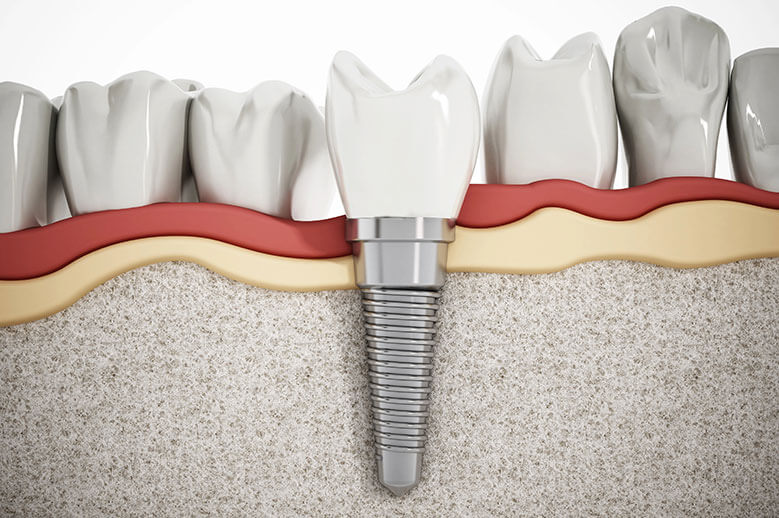
A single dental implant with crown typically costs more than a denture tooth. The total usually includes the titanium implant post, the abutment, and the custom crown, plus a bone graft if one is needed to support the post.
Implants cost more because the process involves a minor surgical procedure, a multi-month healing period, and a custom-made crown, compared to the more straightforward fabrication used for dentures. For patients replacing multiple teeth, implant-supported bridges can reduce the total number of implants needed, bringing the per-tooth cost down.
Which Option Is Cheaper Long-Term: Implants or Dentures?
Implants are typically cheaper long-term, even though dentures cost less upfront. Dentures usually need to be relined, adjusted, or replaced every five to ten years as your jawbone and gum tissue change shape over time, and those recurring costs, along with ongoing adhesives and cleaning supplies, add up over the years you wear them.
Implants, by comparison, are designed to be a long-term solution. With proper care and routine dental visits, the implant post itself can last for decades, and in many cases for life. The crown on top may eventually need replacement due to normal wear, but the foundation underneath typically does not need to be redone, which often makes implants more cost-effective over time even though the initial investment is higher.
What Else Affects the Total Cost?
Beyond the base price of the treatment itself, a few other factors influence what you ultimately pay for either option:
- Number of teeth being replaced. Replacing a single tooth costs less than replacing a full arch, regardless of which treatment you choose
- Need for preparatory procedures. Tooth extractions, bone grafting, or gum disease treatment may need to be addressed before either implants or dentures can be placed
- Material and design choices. Implant crowns and denture bases come in a range of materials, with more durable or natural-looking options typically costing more
- Insurance coverage. Coverage for implants and dentures varies widely between plans, which can significantly change your out-of-pocket cost
Does Insurance Cover Implants or Dentures?
Coverage depends on your specific plan and varies widely. Some dental insurance plans offer partial coverage for dentures since they are considered a standard restorative treatment, while implants are sometimes classified differently and may receive less coverage. It is worth reviewing your benefits or asking our team to verify your coverage before treatment begins. See our dental insurance page for details. For patients without sufficient coverage, Clock Tower Dentistry also offers financing options to make either treatment more manageable.
Which Option Is Right for You?
Cost matters, but it should not be the only factor. The right choice also depends on your bone health, how permanent a solution you want, and your overall comfort with a surgical procedure versus a removable appliance. Dentures may be the better fit if you need a faster, more budget-friendly solution or are not a candidate for implant surgery due to bone density or certain health conditions. Implants tend to be the better long-term investment for patients who want a permanent, natural-feeling solution and who are good candidates for the procedure.
During your consultation, our team will evaluate your oral health, discuss your goals, and help you weigh the upfront cost against the long-term value of each option so you can make the choice that works best for your situation.
Schedule a Consultation in Palatine, IL
Deciding between dental implants and dentures is easier with guidance from a dentist who understands your specific needs. At Clock Tower Dentistry, Dr. Samer Abdallah, DDS and our team take the time to explain your options clearly, including the costs involved, so you can move forward with confidence.
Clock Tower Dentistry is located at 124 W Northwest Hwy, Palatine, IL 60067, and we welcome new patients.
Call us at (847) 481-8400 or request an appointment online. We offer flexible scheduling, including evening and Saturday appointments, to fit your busy life.
Frequently Asked Questions
Are dental implants more expensive than dentures?
Yes. Implants generally cost more upfront because they involve a surgical procedure, a healing period, and additional components, while dentures are typically more affordable initially. Implants often provide more long-term value since they can last decades without needing replacement.
Is it cheaper to get one implant or a full set of dentures?
A full set of dentures is usually less expensive than a single dental implant. However, if you are only missing one or a few teeth, an implant may be more cost-effective than a partial denture once you factor in long-term durability.
Can I switch from dentures to implants later?
Yes, in many cases. Patients who start with dentures sometimes transition to implants later on, either as individual implants or an implant-supported denture for added stability. Your dentist can evaluate whether your jawbone has enough density to support implants at that time.
How can I find out the exact cost for my situation?
The most accurate way to get a cost estimate is to schedule a consultation. Every patient’s needs are different, and factors like bone health, the number of teeth being replaced, and insurance coverage all affect the final price.
Disclaimer
This content is intended for general informational purposes only and does not constitute medical or dental advice. Every patient’s situation is unique, and treatment experiences may vary. Please consult with a qualified dental professional for guidance specific to your individual needs and circumstances.
2026-05-02
My experience was very good …the dentist took real good care of me. Im sending people to him for work. Hooefully they will do my implants…
 Dikari L.
2026-05-02
The doctor Abdallah is amazing, he’s fast and precise in what he does. He will always give me updates on what he is doing and what is next. I love ...
Jennire Hernandez R.
2026-04-23
Incredible dentist! Extremely thorough, explanatory and to the point on what needs to get done. By far the best experience I have ever had with a d...
joseph C.
2026-03-19
We had an excellent experience with this office during a very stressful situation. My son chipped a significant portion of his front tooth, and I c...
Polina B.
2026-03-16
Great place to go. Everytime I go in its a very good experience. My teeth have been well taken care of here.
Jeremy B.
2026-03-02
Great staff, great experience getting a consultation. The doctor was very thorough, explained everything in great detail, attention to detail was t...
Kathy S.
2026-02-22
Very nice and clean. Went in for a failed filling and the Doctor was awesome. I definitely recommend and will come back for more work.
Patrice H.
2026-01-13
They were very helpful. I was scared about my implant but they took the time to explain things to me and ensure I wasn't confused. Highly recommend
Joanna G.
2025-12-21
Fantastic staff and DR. Is Super with Patients very explicit, also very calming with nervous Patients like me.
Jean L.
2026-02-01
I had a great experience at Clock Tower Dentistry! The office is beautiful - modern, clean, and thoughtfully decorated which made the whole visit f...
Marusia M.